
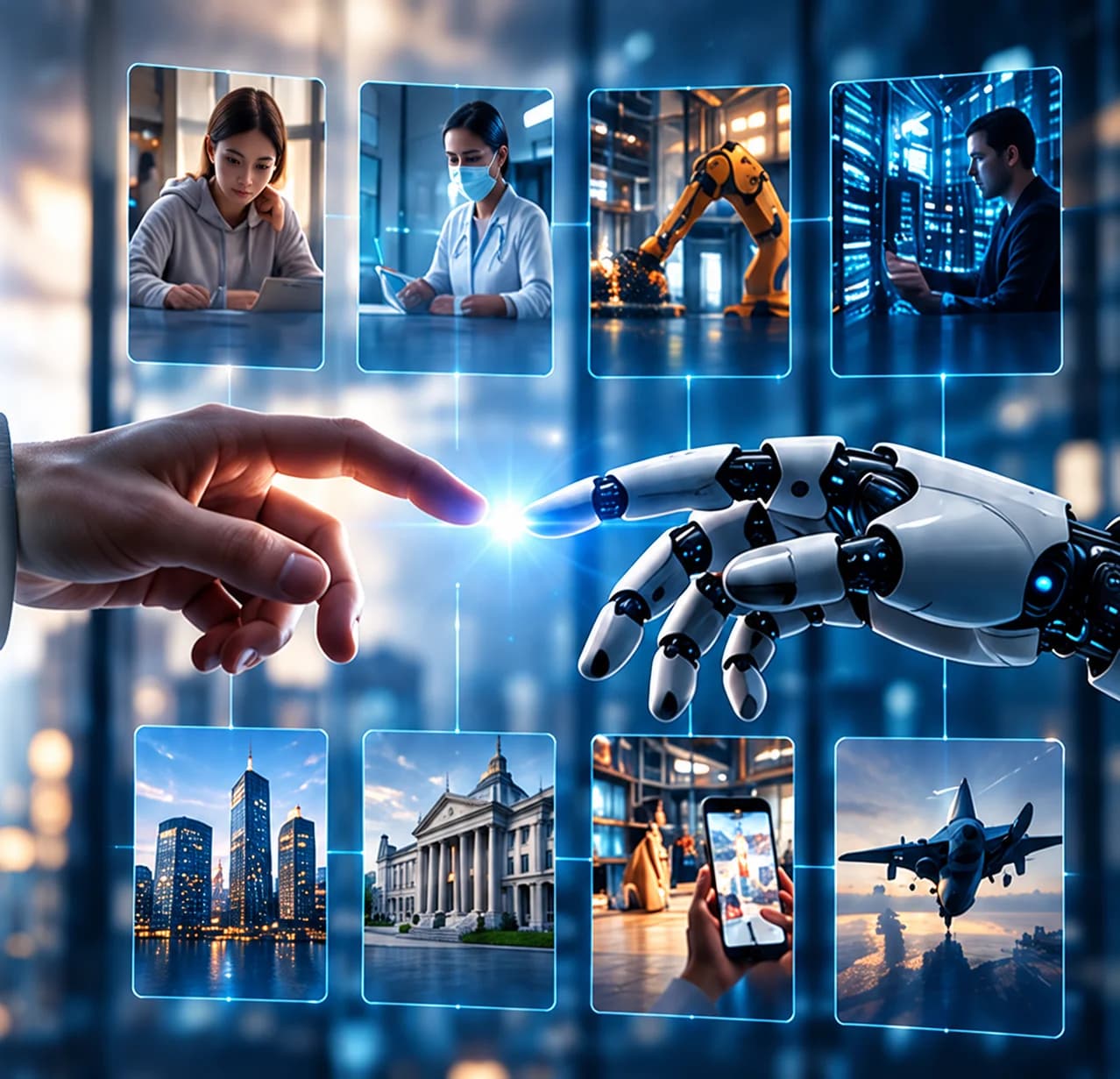
In 60 seconds
The jump is real. AI is moving from generating answers to using computers, calling tools and carrying out multi-step workflows.
Autonomy is the real boundary. The same technology becomes a different kind of risk once it is allowed to act on its own.
A human in the loop is not automatically human control. When approval becomes routine, responsibility can remain human on paper while the machine is effectively making the choice.
The business case is bigger than token costs. Logging, security, integration, exceptions and recovery all belong in the cost model.
Three figures illustrate how quickly this is moving:
- 66.3% success on OSWorld for leading agents in 2025, compared with roughly 12% a year earlier. Source: Stanford AI Index 2026.
- 58% of AI users say they are producing work they could not have produced a year earlier. Source: Microsoft Work Trend Index 2026.
- 15x growth in active agents inside Microsoft 365 year on year. Source: Microsoft Work Trend Index 2026.
Three years ago AI helped with an email. Today it operates computers.
The progress of the past few years is exactly why a linear view of 2031 makes little sense. Nobody knows how quickly this will continue, but pretending that the next five years will simply bring “a bit more Copilot” is not very credible either.
2023: a smart text box
For many employees, generative AI meant rewriting an email, creating a summary, finding ideas or drafting a first version of a text. Useful, but usually still separate from the systems where the real work happened.
2026: AI that performs work
Frontier models write code, understand images and audio, call tools, navigate software and combine several steps as an agent. The move from answer to action is already under way.
The next step: goals instead of prompts
Not: “Summarise this file.”
More often: “Find what is missing, check the rules, prepare a recommendation and come back when a human decision is needed.”
Computer use by AI agents
Measured: OSWorld evaluates computer tasks across operating systems. The top 2025 result was 66.3%, with a human reference score of 72.35%. Source: Stanford HAI, AI Index 2026, Technical Performance, highlight 9.
METR looks at something different: not simply whether a model gets one answer right, but how long a task is that an expert would normally need hours to complete. Historically, that task horizon has roughly doubled every seven months.
That trend is heavily influenced by software-like tasks. It is not a promise that the same pace will continue for five years across every sector.
A benchmark is not a production environment
These figures mainly show how quickly capabilities are improving. They do not prove that an agent is already reliable enough to run an important business process without supervision.
Stanford refers to a “jagged frontier”: a model can perform very well on a difficult programming or science benchmark and still fail on a seemingly simple exception. Capability and reliability are not the same thing.
That is why this article goes further than the usual “AI will change jobs” discussion. The more interesting question is what happens when systems do not only assist people, but start carrying out more of the work themselves, and how companies avoid confusing speed with control.
ADS Autonomy & Impact Model
The real boundary is not AI. It is what you allow AI to do.
A poor answer to a question is annoying. A poor answer that is automatically turned into an action can be much more expensive.
An agent that says a firewall rule is probably causing an issue has a different responsibility from an agent that changes that rule itself. A recruitment tool that surfaces twenty promising candidates is different from a system that automatically rejects the other 1,980. A medical assistant that orders possible causes is different from software that starts a treatment.
The bigger the consequences of an error, and the harder that error is to reverse, the less autonomy you should give without additional controls.
1. ASSIST
AI writes, searches, summarises and structures. A person decides what happens with the output.
2. ADVISE
AI combines internal data and makes recommendations. A person validates the judgement and remains responsible for the decision.
3. ACT
AI performs actions in systems. Access rights, approvals, logging and recovery are no longer optional extras. They become basic conditions.
ADS model: autonomy alone is not enough to assess risk. Combine it with the impact of a mistake. The greater the impact and the harder the recovery, the stronger the controls around approvals, logging, permissions and human accountability need to be.
Why this matters now
On 5 May 2026, Microsoft reported a fifteenfold increase in unique active agents across the Microsoft 365 ecosystem between March 2025 and March 2026. On 25 August 2026, McKinsey reported that 40% of respondents at organisations with more than $1 billion in annual revenue were scaling agents in at least one function, up from 27% a year earlier.
Agentic AI is no longer only a developer demo.
Measured: McKinsey, The State of AI 2026: On the road to ROI, key takeaways / Exhibit 2. This measures reported scaling in at least one function, not full organisational autonomy.
This does not mean every process will soon run autonomously. It does mean companies are already making choices about permissions and responsibilities that may be much harder to unwind a year from now.
What can go wrong?
Most AI risks do not start with a “bad prompt”
As long as AI only produces text, errors are usually visible and reversible. Once AI can read company data or operate systems, the risk shifts towards identity, access, validation and human trust.
Shadow AI and data leakage
People use tools because they save time, sometimes without knowing what happens to the information they enter. Customer data, contracts, source code or HR information can end up outside the intended environment.
Prompt injection
An agent can read instructions inside websites, documents or emails that the user never intended as instructions. OWASP now describes this as a practical path towards data exfiltration and unwanted actions.
Too many permissions
A system does not need to be malicious to cause damage. A simple mistake combined with broad access can be executed at scale. Least privilege applies to agents just as much as it does to people.
Deepfakes and identity fraud
On 30 September 2026, Europol again warned that criminals are using generative AI, deepfakes and autonomous agents to scale fraud and cybercrime more quickly.
A human in the loop is still not necessarily real control
An approval step on paper is not enough.
If an agent produces a correct recommendation one hundred times, the person reviewing attempt 101 will naturally look at it less critically. That effect becomes stronger when speed is rewarded, context is incomplete or saying “no” creates additional work.
At that point the human may remain formally responsible while the AI increasingly makes the real decision.
Real control only exists when the reviewer understands what is changing, has enough time to look at the proposal, has the expertise to recognise a mistake and can reject the recommendation without being penalised for doing so.
Give context, not just a button
Show why the agent is recommending something, what data were used, which systems are affected and what changes if the action is approved.
Let the risk determine the level of control
Use sampling for low-risk actions. Require explicit or dual approval for sensitive actions. Then audit whether reviewers actually intervene when they should.
Make it possible to say no
Give reviewers enough time and authority to deviate from the AI recommendation. For high-impact actions, a short justification or a deliberate selection of supporting evidence can be more useful than a generic Approve button.
From theoretical risk to real exploitation
On 14 April 2026, OWASP described a clear shift towards incidents involving agent identities, excessive autonomy, supply chains, data exfiltration and prompt injection. Stanford recorded 362 documented AI incidents in 2025, compared with 233 in 2024.
Europe is setting a higher bar in sensitive domains
The European AI Act makes an explicit distinction between different applications. AI used in areas such as education, employment, critical infrastructure and certain essential services can be treated as high risk.
Obligations for certain Annex III high-risk use cases, including education, employment and critical infrastructure, become applicable from 2 December 2027. For high-risk AI embedded in regulated products, the date is 2 August 2028.
That is not a reason to postpone AI. It is a reason to know where AI is already being used, what data it sees and which decisions it influences. Technically possible and organisationally sensible are not the same thing.
Education and professional knowledge
A better assignment does not automatically mean better learning
Education shows particularly well why output alone is a poor measure of success.
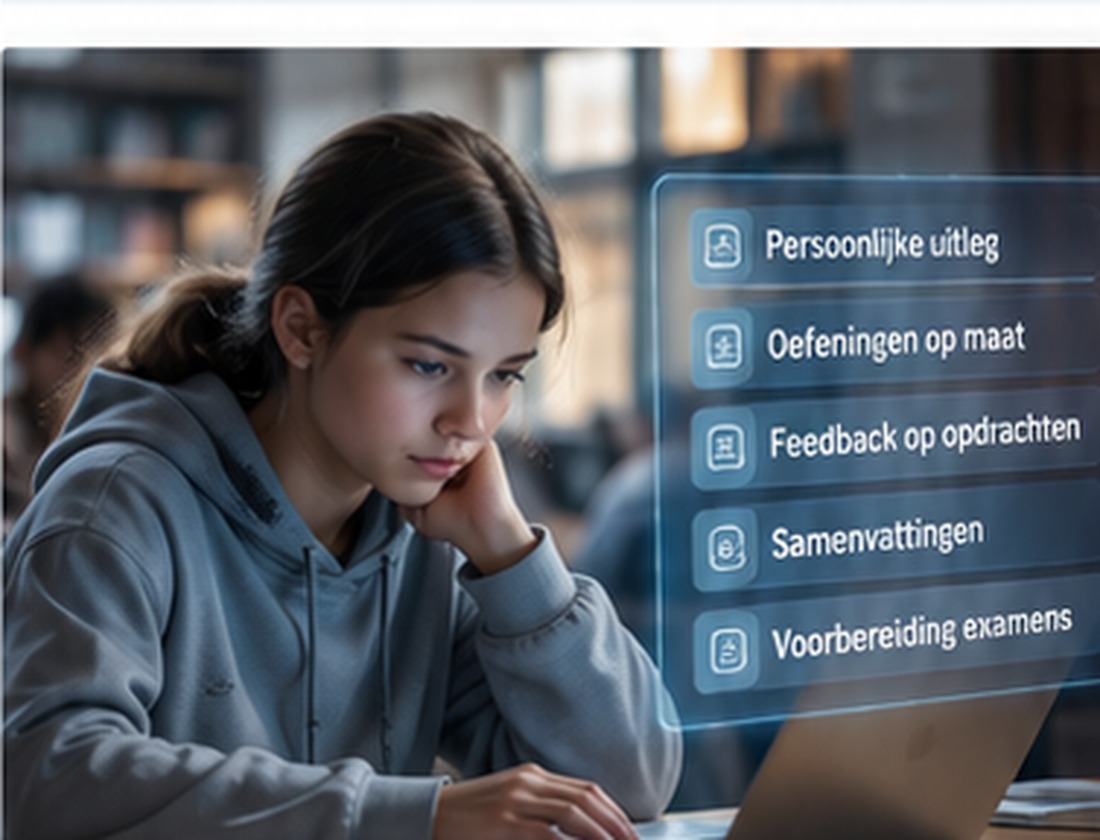
According to PISA 2025, 42% of Belgian students use an AI chatbot at least weekly to learn. That can be genuinely useful. Extra explanations, tailored exercises, language support and feedback can suddenly be available whenever they are needed.
But the OECD points to a simple problem. AI can produce a better text or solution without the student understanding more. When the difficult thinking step is systematically outsourced, the quality of the work can improve faster than the learner’s own skill.
The right question is not only “Is the answer better?” but also “What can the student still do when the AI is removed?”
That does not mean schools should ban AI. It means education itself has to adapt. There may need to be more attention to the reasoning process, more oral explanation of why something is correct and deliberate moments when students have to think without AI.
The same problem exists at work
A junior engineer learns by investigating incidents. A lawyer learns by reading files. An accountant learns by spotting inconsistencies. A recruiter learns by seeing large numbers of profiles and conversations.
That preparatory work is exactly the kind of work AI can take over faster and faster. The question is therefore not only how much time we save. It is also how the junior of today still becomes the senior of tomorrow.
The labour market is starting to reflect that tension. PwC finds that highly AI-exposed junior roles increasingly ask for skills that used to be associated with more senior profiles. ManpowerGroup sees the same shift from the employer side. In its 2026 Talent Shortage Survey of 39,063 employers in 41 countries, AI Model & Application Development (20%) and AI Literacy (19%) top the list of hard-to-find skills, while Communication, Collaboration & Teamwork remains the most sought-after human capability (39%).
That is not a contradiction. As AI takes on more preparatory work, the human contribution moves faster towards judgement, context, collaboration and recognising when the standard route is wrong.

HR and recruitment
AI can search. But who decides who gets a chance?
Recruitment shows the difference between adding AI to a process and redesigning the work around it. A study commissioned by ManpowerGroup Talent Solutions and developed with Everest Group, based on 80 senior HR and talent leaders in the US and UK, found that more than 90% were already using AI in talent acquisition, while fewer than 5% described the results as transformational.
The sample is small, but the problem is recognisable. AI does not automatically improve an old process. Fifty-four percent also said AI-generated CVs, applications and interview preparation were making it harder to judge a candidate's true capability.
The issue becomes more sensitive when a system creates a shortlist from thousands of candidates and nobody sees the rest. At that point AI is not merely assisting; it is helping determine who gets access to a conversation at all. The European AI Act classifies certain employment-related applications as high risk for exactly that reason.
Where AI is strong: searching, structuring, comparing, administration.
Where caution remains essential: final rejection, performance decisions and processes that directly affect someone's career.
Healthcare
A second pair of eyes can be extremely useful. An invisible final decision-maker is not.
AI can help assess medical images, prepare reports, summarise information and identify patterns a person may miss. That does not make clinicians redundant. It can give them more time for interpretation and patient contact.
WHO/Europe mapped the gap at the end of 2025 using a survey carried out in 2024 and 2025 among 50 of its 53 Member States. At that point 64% were already using AI-assisted diagnostics, while only 8% had a health-specific national AI strategy and 8% had clear liability standards for AI failure. WHO repeated the governance warning in July 2026.
The more sensitive the decision, the more important it is that a person is not only “in the loop”, but also genuinely has enough knowledge, time and authority to challenge the AI.
IT, cybersecurity, finance and legal
This is where AI moves fastest from advice to execution
IT
An agent can read tickets, analyse logs, search documentation, write code, prepare a change and interpret test results. In standardised environments, the step towards automatic execution is an obvious one.
The Q3 2026 Experis Tech Talent Outlook shows why technical AI capability and human skills should not be treated as opposites. Among 4,497 Tech & IT Services employers across 42 countries, AI Modeling & App Development topped technical skills at 34%, while Communication, Collaboration & Teamwork topped human skills at 41%.
That can remove a lot of routine work. But it also makes permissions, logging and recovery more important. An agent that is allowed to act in production should effectively be treated like a digital colleague with narrowly defined permissions, not like a clever text box.
A useful progression is:
- Read: analyse logs, tickets, contracts, transactions and files.
- Propose: prepare a change, recommendation, booking or legal draft.
- Execute: perform actions in production, payments, customer records or compliance workflows.
Cybersecurity
Defenders get faster analysis, correlation and triage. Attackers get the same acceleration for social engineering, research and automation. Europol warned on 30 September 2026 that criminals are using generative AI, deepfakes and autonomous agents to scale fraud and cybercrime.
The answer cannot simply be “more AI”. Identity, verification and trust boundaries become more important as humans and machines become more convincing imitations of one another.
Finance and accounting
Reconciliation, reporting, anomaly detection and case preparation are well suited to automation. Within five years, it is entirely plausible that an agent prepares a large part of a close or control process and only sends exceptions to a person.
Legal and tax
Research, document analysis and first drafts become cheaper. That shifts value towards context, negotiation, strategy and responsibility. If an analysis that once took six hours takes twenty minutes, billing value purely in hours becomes a less convincing business model.
Producing information gets cheaper. Responsibility does not.
Government, retail and media
Users may not always notice that AI sits in the middle
Government
AI can summarise files, search regulations, guide citizens and help flag fraud. That can make public services noticeably faster.
But an efficient wrong decision is still wrong. If a citizen is denied a benefit, permit or service, there still needs to be an understandable reason and a real route to challenge the decision. The OECD sees widespread AI use in government, but much less systematic measurement of its social impact.
Retail
The next step in online shopping is probably not another chatbot on a webshop, but an agent on the customer’s side. It compares prices, delivery and conditions and may be allowed to place an order within agreed limits.
That even changes SEO and e-commerce. A company will need to present information not only persuasively for people, but clearly enough for machines comparing products on a customer’s behalf.
In five years, your customer may not even visit your website personally. Their agent may request prices, compare conditions, check availability and make a choice. Part of the interface between companies could become machine-to-machine.
Media, communication and marketing
When everyone can produce reasonable content, mediocrity becomes almost free.
AI makes transcription, translation, image production, research and first drafts cheap. Useful, certainly. But there is a strange side effect. If everybody uses the same models for the same kinds of output, websites, proposals, posts and presentations start to look more alike.
The Reuters Institute therefore expects greater emphasis on original reporting, analysis, personality and verification. The same applies outside journalism. For companies, real experience becomes more valuable precisely because generic explanation is available everywhere.
In a world where everyone has access to the same base models, first-hand experience may become one of the hardest advantages to copy.
Industry, logistics and defence
In the physical world, an AI mistake comes out of the screen
A lot of the public AI debate focuses on knowledge work. But industry is increasingly connecting models to sensors, robots, predictive maintenance, quality control, planning and digital twins. Logistics uses the same technology for routing, inventory and real-time adjustments.
That changes the risk equation. A bad paragraph can be rewritten. A bad decision in a factory can stop production, damage equipment or disrupt an entire chain.
The difference between digital and physical environments matters. Agents can already complete quite complex digital tasks and retry quickly when something fails. Robots still achieve only about 12% on real household tasks in Stanford’s reporting. Reality remains messy.
We will probably see highly autonomous office and IT workflows much earlier than fully autonomous factories or care environments.
Defence
The same questions, but with much heavier consequences.
AI can analyse imagery and sensor data, identify cyber threats, support logistics and give decision-makers a faster overview. NATO is explicitly investing in AI and human-machine collaboration.
But defence also shows why every technical possibility is not automatically a good operational choice. The greater the impact, the more important traceability, control, reliable data and the ability to stop a system become.
A useful distinction remains:
- Observe: combine and prioritise sensors, images and signals.
- Advise: present scenarios, risks and options to human decision-makers more quickly.
- Act: the more serious the consequences, the higher the threshold for autonomous execution should be.
An important nuance
Five years is a long time in software. Five years is much shorter in regulated infrastructure, medicine or defence. Technical capability can move quickly while certification, liability, budgets and social trust move at a very different pace.
2026 → 2027 → 2031
If the current direction continues, it will change not only the tool but how work is divided
This is not a prediction with fixed deadlines. Some sectors will move faster and others much more slowly. The direction is clear enough, however, to outline scenarios that are already relevant for decisions about data, people and systems.
| Domain | 2026: measured direction | 2027: ADS scenario | 2031: ADS scenario |
|---|---|---|---|
| Education | Chatbots, explanations, summaries, lesson preparation | Personal tutoring and level-adapted assignments embedded in learning platforms | Education and assessment designed with AI; more emphasis on reasoning, defending work and skills without AI |
| HR | Sourcing, CV analysis, content and interview preparation | Agents combine sourcing, scheduling and candidate files | Continuous skills and workforce planning; people handle exceptions and sensitive decisions |
| IT | Copilots and agents for code, tickets, logs and documentation | Standard incidents and safe changes executed under supervision | A large part of digital operations runs agent-first; engineers focus on architecture, security and exceptions |
| Healthcare | Documentation, analysis, decision support | More continuous support around patient data and administration | Permanent digital assistance alongside clinicians; decision rights remain strongly regulated |
| Finance | Analysis, reconciliation, fraud and anomaly detection | Agents handle larger parts of reporting and control workflows | Routine processes largely autonomous within budget and approval limits; people focus on exceptions |
| Retail | Personalisation, forecasting, search and purchase advice | Shopping agents compare and prepare purchases | Personal agents book and buy within rules; companies also optimise for machine-to-machine commerce |
| Industry | Predictive maintenance, planning, quality control | More closed loops between detection, advice and operator action | More autonomous processes in controlled environments, with fail-safe design and clear human override |
| Government | Case support, search, chat and analysis | More proactive citizen guidance and automatic case preparation | Many administrative steps automated, while human appeal and exception routes remain essential |
ADS scenario: the 2027 and 2031 columns are our analysis based on current capability, adoption and regulatory trends. They are not guaranteed timelines.
We expect the fastest change where work is fully digital and “right” or “wrong” can be measured clearly. That is why software, IT operations and administrative workflows can change much faster than healthcare, industry or public decision-making. Not because AI becomes less capable there, but because the cost of failure, regulation and the physical world act as stronger brakes.
One year versus five years
2027 will probably mostly feel faster. 2031 may feel structurally different.
Within roughly a year, AI will become less visible for many people. Not because it is used less, but because it will simply sit inside Outlook, Teams, CRM, ERP, service desk platforms, development tools and sector software.
Within about one year
Less “I open AI” and more AI working in the background, preparing information, following up tasks and executing standard steps. Employees produce fewer first versions and spend more time on exceptions, customers, interpretation and approval.
After that
The move is from individual tasks to goals. “Summarise this file” becomes “prepare the file, find what is missing and come back when a decision is required.” Agents use several systems to reach that goal.
Towards five years
In digital processes, a large part of execution could shift to agents. Not everywhere, and certainly not without oversight. But in many jobs the human role may increasingly revolve around setting goals, dealing with exceptions, adding context and carrying responsibility.
Why it will not move equally fast everywhere
Reliability. An agent that fails one time in three can be impressive on a benchmark and unusable in a critical process without a safety net.
Regulation. HR, education, healthcare, finance and government touch fundamental rights, liability or safety and therefore face heavier control requirements.
The physical world. Software can retry quickly. A robot, machine or medical device cannot do that without consequences.
Cost. More autonomy does not automatically create a positive business case. Model price is only one part of the bill.
Data. AI cannot make reliable business decisions on information that is scattered, outdated or poorly governed.
Trust. People do not accept the same level of machine decision-making in every domain. Technology can move faster than culture.
The bill is bigger than tokens
Cheap model usage does not automatically mean cheap operations. An agent that costs little in model calls can become much more expensive operationally once it reads production data, performs actions and has to be demonstrably secure, auditable and recoverable.
Model, API and tool usage
Agents consume more context, make several API and tool calls and sometimes retry. One workflow can therefore consume far more than a single chat response.
Logging and audit
You need to be able to reconstruct who or what did something, with which data and with what outcome. Continuous logging requires storage, monitoring and management.
Security and identities
Secrets, service accounts, restricted permissions, security reviews and periodic access checks become recurring operating costs.
Testing and evaluation
Agents do not only need to “work” in a demo. They need to be tested against exceptions, regressions and abuse scenarios.
Recovery and reversal
Actions require state information, recovery paths and sometimes snapshots. Without a reliable recovery path, a cheap agent can create an expensive mistake.
Human exceptions
The difficult 5% does not disappear. It is often concentrated among experienced employees and becomes more expensive per case.
What does this mean for organisations?
Do not start with “Which AI should we buy?” Start with what you want it to be allowed to do.
A company does not need a fifty-page AI policy before it can start. But before AI gets access to company data or permission to act, five things should be clear.
1. Value
What real problem are we solving? Time, quality, capacity, customer experience or something else?
2. Data
What information may the system see? Where is that data, how sensitive is it and who owns it?
3. Autonomy
May AI only read, may it also advise, or may it act? Not every use case deserves the same freedom.
4. Control
When must a person intervene? Who can approve, and does that person have enough context to genuinely say no?
5. Recovery
Can we see afterwards what happened, stop it and reverse it if necessary?
Mini-case: a service desk agent that grows under control
Imagine a company introducing an agent in the service desk. The first question is not whether it may work “autonomously”. The question is which step can safely be opened up.
Assist: reads tickets and documentation, finds similar incidents and writes a recommendation. No change rights.
Advise: prepares a reset or recovery action and shows evidence, impact and rollback. An employee decides.
Act: performs only pre-approved low-risk actions, with identity checks, logging and sampling. Production changes remain blocked.
Three wider questions then remain for every organisation:
- What can AI do for us? Where do people lose time, where is capacity missing and where could information be used better?
- What do we absolutely not want AI to do on its own? Which decisions, data and actions are too sensitive for autonomous execution?
- What do we still want people to be able to do themselves? Which tasks build the expertise people will later need to challenge AI critically?
From article to practice: AI autonomy scan
Organisations that want to apply this framework to their own environment can work with ADS to review a limited number of concrete AI use cases against value, data, permissions, human control and recoverability.
Conclusion
AI is moving faster than many organisations are designed to change
Over the past three years we have gone from rewriting emails to software agents, multimodal models and systems that can navigate computers by themselves. That makes predictions uncertain, but one thing is becoming fairly clear: the next few years are not only about better answers.
They are about systems that can see more, choose more intermediate steps and perform more work.
Some companies will move too quickly. Others will wait so long that employees start using uncontrolled solutions themselves. Neither is a good plan.
The organisations that handle this well are unlikely to be the ones with the most AI. They will be the ones that are clear about where AI may accelerate work, where human approval genuinely adds value and which knowledge people still need to retain.
“What can AI do for us?” remains an important question. From now on, it should always sit next to another one: “What do we absolutely not want it to do on its own?”
Sources and further reading
- Stanford HAI (2026). AI Index Report 2026. Technical Performance, highlight 9: OSWorld 66.3% and human baseline 72.35%. Economy, highlight 5: 88% organisational adoption and 70% GenAI in at least one function. Responsible AI, highlight 1: 362 incidents in 2025 versus 233 in 2024. https://hai.stanford.edu/ai-index/2026-ai-index-report
- Microsoft (5 May 2026). Work Trend Index Annual Report: Agents, human agency, and the opportunity for every organization. Survey of 20,000 AI-using knowledge workers across 10 markets; 58% say they are producing work that was not possible a year earlier; telemetry reports 15x growth in active agents from March 2025 to March 2026. https://www.microsoft.com/en-us/worklab/work-trend-index/agents-human-agency-and-the-opportunity-for-every-organization
- McKinsey (25 Aug. 2026). The State of AI in 2026: On the road to ROI. Key takeaways / Exhibit 2: at organisations with more than $1bn in revenue, 40% are scaling agents in at least one function, up from 27% a year earlier. https://www.mckinsey.com/capabilities/quantumblack/our-insights/the-state-of-ai
- Belgian Federal Public Service Economy (2026). Belgian Digital Economy Overview 2026. 34.54% of Belgian companies used at least one AI technology in 2025, compared with 24.71% in 2024. https://news.economie.fgov.be/266395-belgie-een-van-de-europese-koplopers-op-vlak-van-ai/
- OECD (2026). PISA 2025 Results: Belgium country note. 42% use AI at least weekly for learning; 27% for summarising; 26% for preliminary research; 26% for writing tasks. https://www.oecd.org/en/publications/pisa-2025-results-volume-i-country-notes_2d4ff9ea-en/belgium_598fabf6-en.html
- OECD (2026). Digital Education Outlook 2026. Analysis of opportunities and risks of generative AI in learning, including cognitive offloading and the difference between better output and actual learning gains. https://www.oecd.org/en/publications/oecd-digital-education-outlook-2026_062a7394-en.html
- WHO/Europe (19 Nov. 2025). Artificial intelligence is reshaping health systems: state of readiness across the WHO European Region. Survey 2024-2025, 50 Member States: 64% AI-assisted diagnostics, 8% health-specific AI strategy, 8% liability standards. WHO repeated the governance warning on 15 July 2026. https://www.who.int/europe/publications/i/item/WHO-EURO-2025-12707-52481-81028
- OWASP GenAI Security Project (14 Apr. 2026). GenAI Exploit Round-up Report Q1 2026. Practical exploits around agent identities, excessive autonomy, supply chains, data exfiltration and prompt injection. https://genai.owasp.org/2026/04/14/owasp-genai-exploit-round-up-report-q1-2026/
- Europol (30 Sept. 2026). EU law enforcement chiefs gather to discuss new challenges in EU security. https://www.europol.europa.eu/media-press/newsroom/news/eu-law-enforcement-chiefs-gather-to-discuss-new-challenges-in-eu-security
- European Commission (2026). AI Act application and enforcement timeline. Annex III high-risk use cases in areas including education, employment and critical infrastructure: 2 Dec. 2027; high-risk AI in regulated products: 2 Aug. 2028. https://digital-strategy.ec.europa.eu/en/policies/enforcement-ai-act
- ManpowerGroup & Experis (2026). 2026 Talent Shortage Survey: 39,063 employers in 41 countries; AI Model & Application Development (20%) and AI Literacy (19%) lead hard-to-find skills. Experis Tech Talent Outlook Q3: 4,497 tech employers across 42 countries; AI development 34%, Communication, Collaboration & Teamwork 41%. A smaller Talent Solutions/Everest Group study of 80 senior HR and talent leaders in the US and UK found more than 90% AI adoption in talent acquisition but fewer than 5% transformational outcomes; 54% reported a noisier candidate signal due to AI-assisted applications. https://investor.manpowergroup.com/node/68796 ; https://www.manpowergroup.com/en/news-releases/news/employers-tighten-focus-on-ai-and-human-skills-as-global-tech-hiring-moderates ; https://www.manpowergroup.com/news-releases/news/90-of-companies-use-ai-in-hiring-fewer-than-5-are-seeing-it-work
- PwC (15 June 2026). Global AI Jobs Barometer 2026. Analysis of more than 1 billion job postings; 2.4 million entry-level roles in the US show highly AI-exposed junior roles are 7x more likely to ask for traditionally senior skills. https://www.pwc.com/gx/en/news-room/press-releases/2026/pwc-2026-ai-jobs-barometer.html
- METR (2026). Task-Completion Time Horizons of Frontier AI Models. Historical trend of rapidly increasing task horizon, with a strong software-task bias; no guarantee the pace continues linearly. https://metr.org/time-horizons/
- World Economic Forum (2026). Global Cybersecurity Outlook 2026. AI as an accelerator for both defence and attack, with governance and human expertise as key conditions. https://www.weforum.org/publications/global-cybersecurity-outlook-2026/
- NATO (13 Jan. 2026). Alliance Digital Strategy. Direction for data, AI, human-machine collaboration, situational awareness and responsible use. https://www.nato.int/en/about-us/official-texts-and-resources/official-texts/2026/01/13/alliance-digital-strategy
Methodological note. The figures above refer to different populations and use cases and should not be compared directly. Labels such as “measured” refer to the named source. The 2027 and 2031 scenarios are ADS analyses. METR’s task-horizon work is strongly weighted towards software-like tasks and should not be extrapolated one-to-one to every sector. The Talent Solutions study is a small US/UK sample and is used here as a targeted indication of the gap between adoption and maturity, not as a global benchmark.